







Search Results for: Asian coffee beans
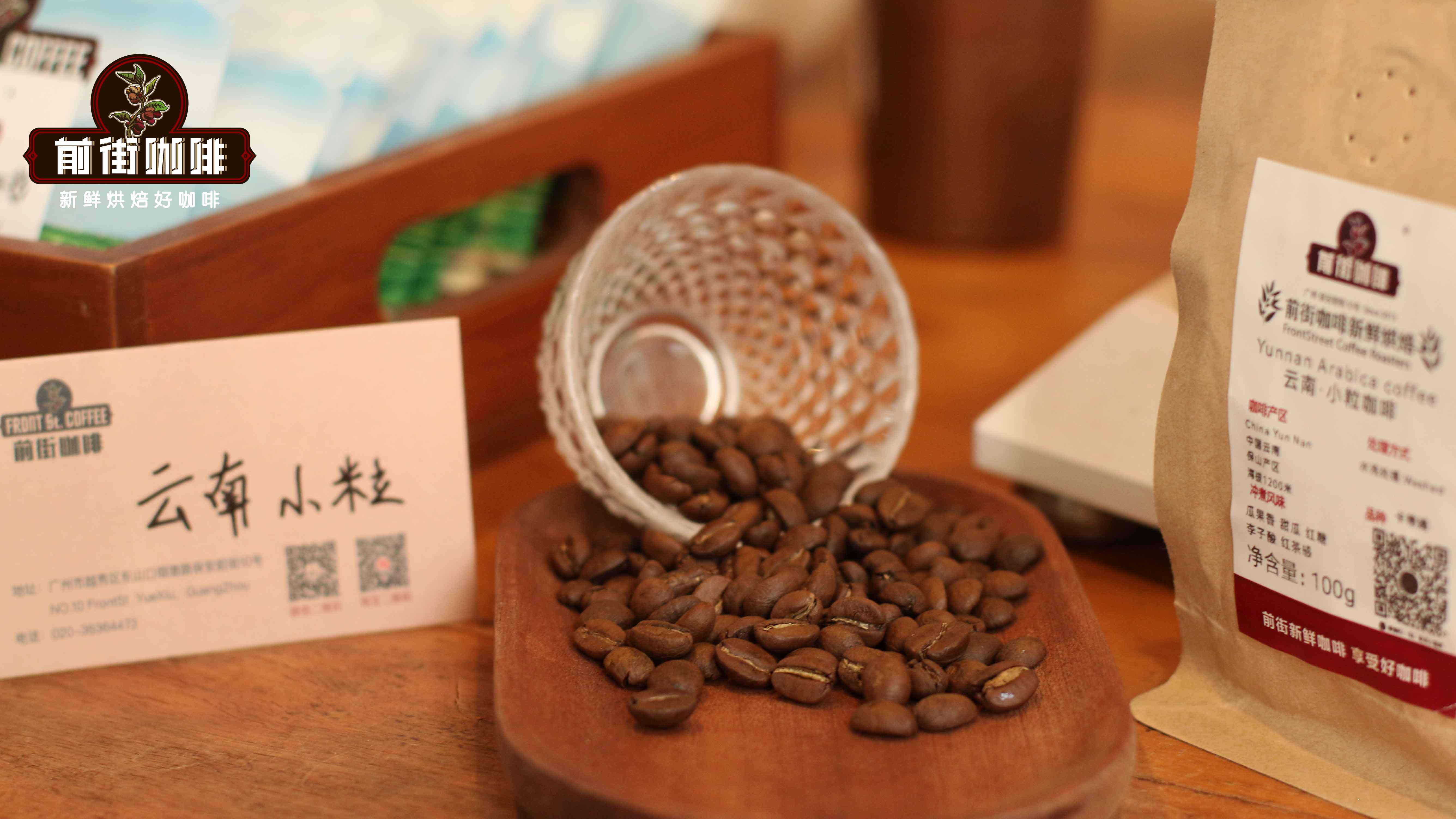
A Complete Guide to the Flavors of Asian Coffee Origins: From Indonesian Mandheling to Yunnan Small-Bean
Asian coffee is known for its full-bodied, steady flavor, with relatively low acidity and pronounced sweetness, often carrying notes of aged wood, herbs, and spice—making it an ideal base for espresso blends. From Sumatra Mandheling in Indonesia and Bird of Paradise in Papua New Guinea to Yunnan Arabica in China, Asian origins display a rich diversity of regional character. This article systematically reviews the flavor profiles, processing methods, and signature products of major Asian coffee origins, with a focus on featured single-origin selections such as Front Street Indonesia Mandheling, Front Street PWN Golden Mandheling, Front Street Papua New Guinea Bird of Paradise, and Front Street 2013 Yunnan Typica, helping coffee lovers gain a comprehensive understanding of the unique appeal of Asian coffee and how to choose it. [more…]
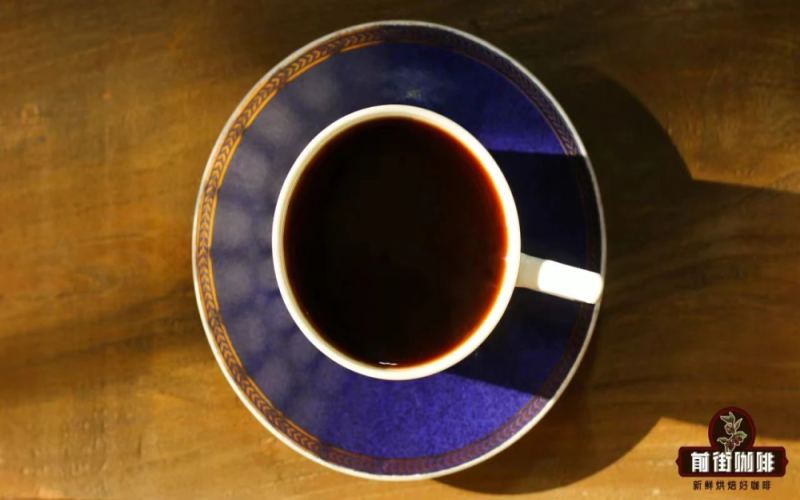
Flavor Analysis and Brand Recommendations for Asian Coffee Regions: A Full Overview of Price and Taste from Mandheling to Yunnan Small-Bean
Asian coffee stands out in the coffee world with its deep, steady flavor profile. Its body is generally fuller than that of Central and South American and African beans, its acidity is lower, and it often carries notes of damp wood, herbs, spices, and earth. This article will guide you through the flavor characteristics of major Asian coffee-producing regions, including the classic richness of Indonesian Sumatra Mandheling, the balanced elegance of Papua New Guinea, and the distinctive fruity aroma of China's Yunnan Arabica. At the same time, we will also recommend the Asian series coffee beans roasted by Front Street Coffee, covering Yunnan Arabica, Yemen Mocha, and Indonesian Mandheling, among others, offering coffee lovers a choice that combines quality and value at just 80 to 90 yuan per half-pound bag. Whether you are a fan of espresso blends or a pour-over enthusiast, you can find an Asian flavor that suits you. [more…]
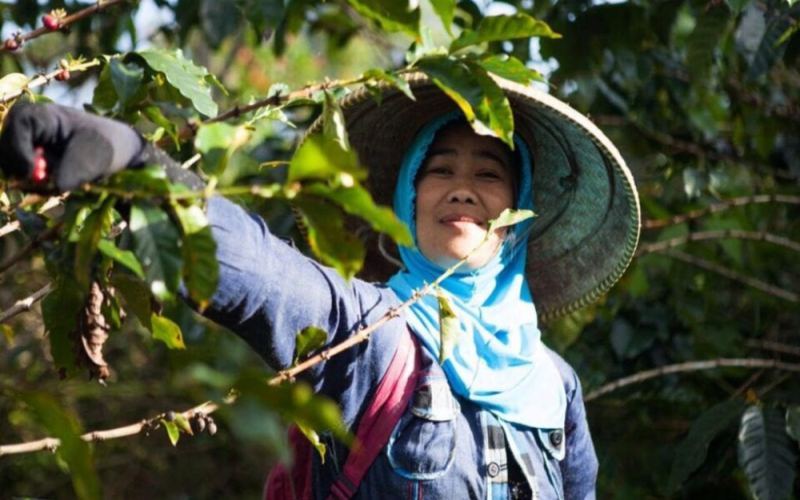
Analysis of the Style Characteristics of Asian Coffee Producing Regions and Thoughts on Selecting Yunnan Specialty Beans
Asian coffee has always stood out in the global landscape with its rich, steady style. From Indonesia's Mandheling to India's Monsooned Malabar, and to China's Yunnan Typica, each producing region has its own unique flavor expression. This article will systematically sort out the characteristics of Asia's main coffee origins, focusing on the historical origins, cultivation distribution, and quality performance of Yunnan coffee, and recommend Front Street 2013 Yunnan Typica, a natural-process bean suitable for introductory tasting. At the same time, it will also take you through the flavor differences and processing methods of Indonesian Sumatra, Java, and Indian coffee, helping you gain a more comprehensive understanding of the charm of Asian beans. [more…]
In-Depth Analysis of Asian Coffee Producing Regions: Flavor Characteristics and Roasting Suggestions for Yunnan, Mandheling, and Other Bean Varieties
Asian coffee regions are world-renowned for their rich, deep, and steady flavor profile. From Yunnan, China to Sumatra, Indonesia, and from India to Papua New Guinea, each region has its own distinctive cup characteristics and processing methods. This article will guide you through an in-depth look at the flavor traits, suitable roast levels, and the stories behind the major Asian coffee regions. For coffee lovers who enjoy espresso blends, Asian beans are often used as a base in recipes, and Mandheling in particular is the go-to choice for dark roasting. Front Street Coffee recommends paying attention to the taste differences between Yunnan coffee and Indonesian Mandheling, as this will help you better choose coffee beans that suit your own preferences. Whether you are after a full-bodied cup or a delicate flavor, Asian regions can offer abundant choices. [more…]

Cocaine Discovered in Nestlé Brazil Coffee Bean Container; Yunnan and Asian Coffee Association Jointly Speak Out to Safeguard Coffee Safety
Recently, a Nestlé factory in Switzerland discovered an unidentified white powder in a shipment of coffee bean containers from Brazil, which police tests confirmed to be cocaine with a purity of 80%. Although Nestlé quickly stated that the relevant coffee beans did not come into contact with any production equipment, the incident still sparked concerns among domestic consumers about coffee safety. On May 9, the Asian Coffee Association and the Yunnan Coffee Industry Association jointly issued a statement, emphasizing the need to strengthen safety controls in the coffee industry chain and calling for special cocaine testing of domestic coffee end products. This article will guide you through the incident, the key points of the associations' statement, and the impact on and responses of the Chinese coffee market. [more…]

Luckin Coffee's Singapore Recruitment Push Draws Attention, Southeast Asian Coffee Market May See New Shifts
Recently, some netizens noticed that Luckin Coffee posted job openings for store manager and other positions on the Singapore recruitment website JobStreet, with salaries of approximately 19,000 to 25,000 RMB, sparking speculation about its expansion into Southeast Asia. Previously, counterfeit Luckin stores appeared in Thailand, and the company officially stated that it had not opened stores in Thailand and had taken legal action, but the store is still operating. Meanwhile, Mixue Bingcheng has successfully entered the Thai market, winning over consumers with low prices and a hygienic environment. The Southeast Asian coffee market has enormous potential, and whether Luckin is truly going overseas remains to be officially confirmed. This article sorts out the timeline of events and retains relevant recommendations from Front Street Coffee, inviting readers to follow the overseas expansion trends of Chinese coffee brands together. [more…]
Global Specialty Coffee Origins Flavor Guide: Characteristics of Asian and American Bean Varieties and Analysis of Representative Origins
For coffee enthusiasts, understanding the flavor characteristics of different producing regions is an important step in exploring the world of specialty coffee. This article takes body, acidity, aroma, and other dimensions as its entry point, systematically sorting out the typical styles of Asian, American, and island-type coffees, and introducing one [more…]
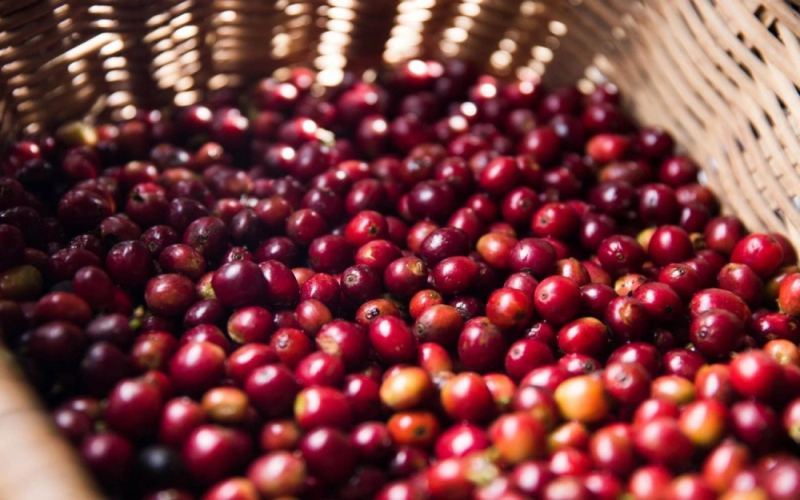
Flavor Analysis of the World's Three Major Coffee Regions: Asian Coffee Origins and a Detailed Guide to Processing Methods for Indonesian and Yunnan Beans
The world's coffee-growing belt is usually divided into three major regions: Latin America, Africa, and Asia. Front Street Coffee has previously introduced you to Africa's bright acidity and Latin America's balanced chocolate notes. This article focuses on the Asian producing regions, examining one by one the coffee characteristics of Indonesia, Yunnan in China, Vietnam, India, and Papua New Guinea. Asian beans as a whole are known for their rich, sweet body. Indonesia's wet-hulling and aged processing, Yunnan's Catimor and Typica small-bean varieties, India's monsoon malabar process, and Papua New Guinea's "Little Blue Mountain" Typica are all typical examples worth savoring in detail. The article also includes brewing parameters and flavor descriptions for several of Front Street's representative Asian beans, for the reference of coffee enthusiasts. [more…]
Flavor Map of Asian Coffee Origins: Planting Characteristics of Yunnan, Indonesia, and Papua New Guinea, and an Analysis of Front Street Coffee's Selected Beans
Asian coffee has always stood out in the global landscape with its rich, steady style—full, rounded sweetness and relatively restrained aroma and brightness. This article focuses on three representative Asian origins—Yunnan, China; Indonesia; and Papua New Guinea—systematically reviewing each region's growing conditions, varietal characteristics, and processing methods, and introducing the corresponding selected beans from Front Street one by one. From Catimor in the dry-hot valley of Baoshan, Yunnan, to wet-hulled Mandheling from Sumatra, and further to the island flavors of Papua New Guinea, readers can use this to build a clear understanding of the overall character of Asian coffee, gaining practical guidance whether for everyday drinking or as a reference when choosing beans. [more…]
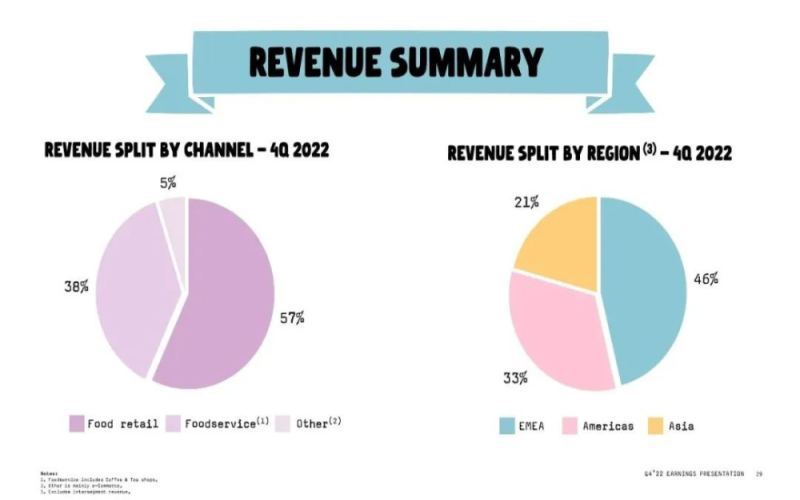
OATLY's losses widened to nearly $400 million last year. Is the oat milk coffee sector cooling down?
Oatly, the oat milk pioneer, recently released its full-year and fourth-quarter financial results for 2022, reporting a net loss of nearly $400 million for the year, further widening from 2021. Although sales volume in the Asian market grew 32% year-on-year, revenue in Asia fell by $800,000 in the fourth quarter due to the impact of the pandemic. China, as the core of Oatly's Asian business, accounts for as much as 93%, and fluctuations in its performance have a significant impact on the overall Asian market. Oatly quickly opened up the market with its positioning as a "new coffee companion" through partnerships with chain brands such as Starbucks, but now the plant-based milk concept has cooled, emerging brands are proliferating, consumers' acceptance of oat milk is still lower than that of dairy milk, and coupled with its relatively high price, Oatly faces the risk of being replaced. To this end, Oatly is trying to find new growth points by expanding into new products such as tea drinks and ice cream, as well as through financing. [more…]
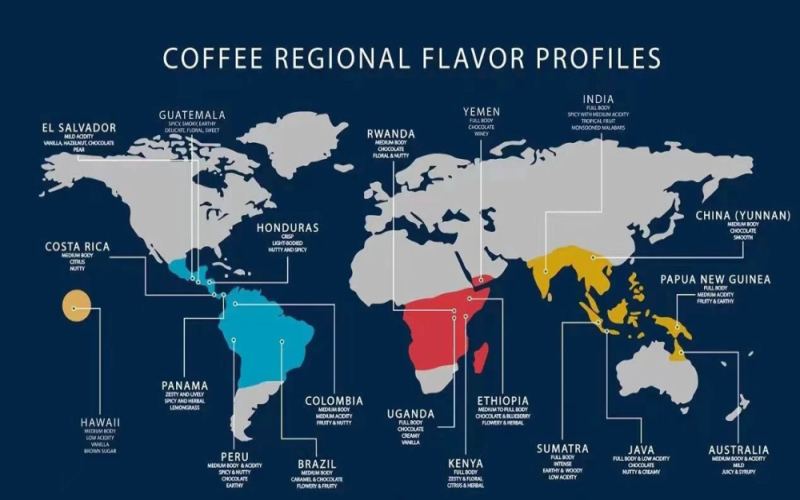
Coffee Region Basics: Flavor Differences and Representative Beans of the African, Central and South American, and Asian Coffee Belts
The Coffee Belt refers to the tropical and subtropical regions where the average annual temperature exceeds 20°C, with warm seasons year-round, frost-free winters, abundant sunshine, and ample rainfall—conditions highly favorable for coffee tree growth. Even among coffees, beans from different origins vary enormously in flavor; even the same variety grown in Panama and neighboring Costa Rica will perform differently. Flavor differences are not only related to variety—altitude, climate, and soil also profoundly influence the formation of coffee flavors, allowing one to identify the origin with a single sip. Front Street Coffee has found in daily cupping sessions that African beans typically have brighter acidity, Central and South American beans have more layered flavors with softer acidity, and Asian beans are full-bodied and steady, with strong taste and low acidity. This article will combine several representative beans from Front Street Coffee to analyze the flavor characteristics of the three major origins. [more…]
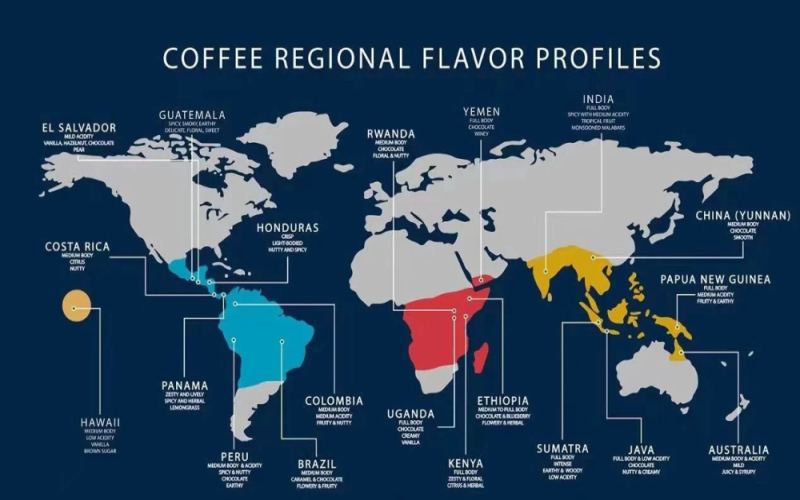
In-Depth Analysis of Asian Coffee Regions: A Comparison of Signature Coffee Flavors and Processing Methods in Yunnan and Indonesia Mandheling
When selecting coffee beans, besides checking the packaging information, starting with the basic flavors of the three major coffee-producing regions and then combining that with specific estates often allows you to find the one that suits you more precisely. Front Street Coffee stores focus mainly on single-origin beans, covering more than fifty types of coffee beans from the three major producing regions worldwide. This article will focus on the Asian coffee-producing regions, highlighting the varieties, processing methods, and flavor differences of two representative origins, Yunnan, China, and Indonesia, while also introducing the coffee characteristics of Papua New Guinea. Yunnan coffee has continued to gain momentum in recent years, with a regional flavor profile based on brown sugar and nuts, full-bodied and mellow; Indonesia, on the other hand, is known for the herbal, medicinal aroma of Mandheling, with the wet-hulled method giving it a unique character. The article also compiles Front Street’s cultivation practices at its Baoshan estate in Yunnan, as well as the differences among several Mandheling coffee beans, for coffee lovers’ reference. [more…]
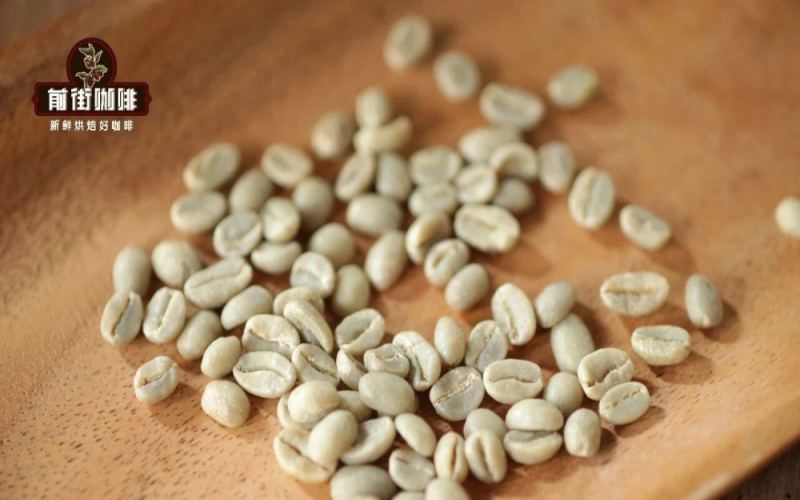
An Analysis of the Flavor Differences Between African, Central and South American, and Asian Island Coffees: Characteristics of the Three Major Producing Regions and Front Street Coffee's Representative Bean Recommendations
Coffee beans from different origins present completely different flavor profiles due to differences in terroir. African beans are known for their bright floral and fruity acidity, with Ethiopia and Kenya as the two benchmarks; Central and South American beans are known for their balanced caramel sweetness and nutty, chocolatey notes, with Brazil, Costa Rica, Panama, and Colombia each having their own strengths; Asian and island beans focus on full body and low acidity, with herbal, spice, and earthy notes. This article reviews the flavor characteristics of the three major origins one by one, and, combined with Front Street Coffee's representative products—Huakui, Yirgacheffe, Cherry Tomato, Cerrado, Tarrazu, Butterfly, Mandheling, Yunnan Small-Bean, and Blue Mountain coffee—provides coffee lovers with a reference for purchasing and tasting. [more…]
A Complete Analysis of the Flavor Differences Between African, Central and South American, and Asian Coffee Beans: From Regional Characteristics to Tasting Dimensions
The flavor code of coffee beans is often hidden in the land where they grow. African beans are known for their bright citrus aromas and berry-like acidity, Central and South American beans for their balanced and smooth character, and Asian and island beans for their full-bodied, low-acid profile. This article systematically sorts out the differences in taste styles among coffee beans from the three major producing regions, and offers an in-depth interpretation of the five tasting dimensions—sweetness, acidity, mouthfeel, balance, and flavor—to help coffee lovers describe and appreciate every cup of coffee more accurately. At the same time, Front Street Coffee, as a coffee specialty research institute, continues to share professional knowledge and, with low-discount events three times a month, lets more people drink good coffee at affordable prices. [more…]
Flavor Analysis of Asian Coffee Origins: Low-Acid, Full-Bodied Coffee Varieties from Indonesia, Yunnan, and More, with Brewing Guides
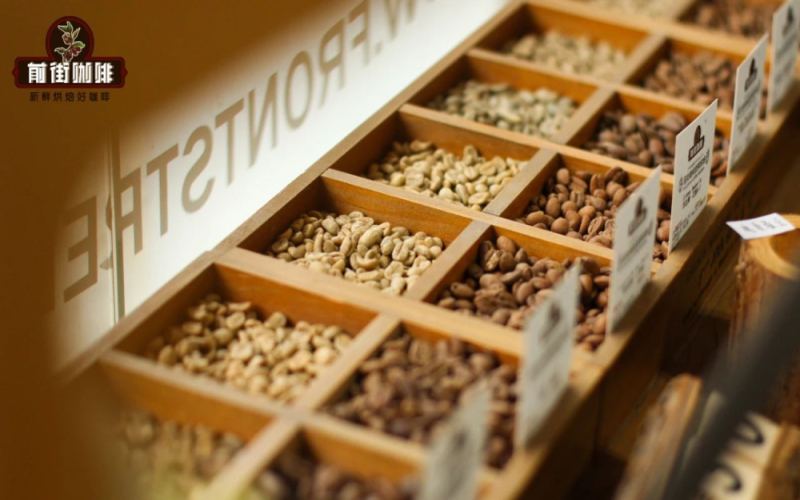
Although the Asian coffee-producing regions are not as famous for renowned estates as Africa or Central and South America, they occupy an important place on the world coffee map with their rich, full-bodied, and low-acidity flavors. Indonesia's Mandheling, China's Yunnan small-bean variety, Vietnam's Robusta, India's Monsoon Malabar, and Papua New Guinea's Bird of Paradise all showcase the distinctive heaviness and sweetness of Asian beans. Front Street Coffee takes you through the varietal characteristics, processing methods, and brewing suggestions of these regions one by one, so that whether used as an espresso blend base or a single-origin pour-over, you can experience the unique charm of Asian coffee. [more…]
The Deep Charm of Mandheling Blends: A Classic Asian Flavor Profile of Low Acidity, Full Body, and Caramel Aroma
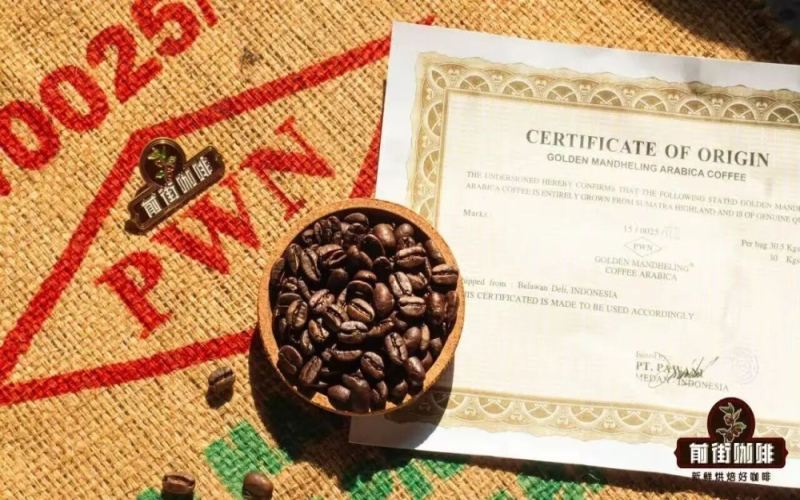
As an outstanding representative of Asian specialty coffee, Mandheling has won the favor of many coffee lovers with its low acidity, full body, and lasting sweet aftertaste. To fully release its caramelized aromas, Mandheling is usually given a deep roast, brewing with a complex sweet fragrance of dark chocolate, nuts, spices, herbs, and sandalwood, revealing layer upon layer of flavor as the temperature changes. If you want a first taste of Mandheling's regional character, Front Street Coffee's Indonesian Mandheling G1 coffee beans are an ideal entry point, from the Lintong region of Sumatra, G1 grade, with wet-hulling and a deep roast bringing out caramel, spice, and nut notes to the fullest. For users with an espresso machine, Front Street Coffee's Classic Blend combines Mandheling with Brazilian coffee and adds a small amount of Robusta to boost the crema, delivering excellent notes of nuts, dark chocolate, and caramel when made into an Americano or latte. [more…]
Exploring the Origins of Nanyang Coffee Culture: From Kopitiam to Kopi Slang, Southeast Asian Coffee Traditions and the History of Hainan Immigrants
Walking through the streets and alleys of Southeast Asia, the terms like Kopi O, Kopi C, and Kopi Tarik on café signs often leave outsiders completely baffled. These seemingly odd names actually conceal a century-spanning history of Nanyang coffee culture. From Hainanese immigrants who ventured to Southeast Asia and opened coffee shops, to the Western dining habits brought by the British, and the taste collision of Robusta beans with condensed milk, Southeast Asian coffee culture blends multiple influences from Chinese, Malay, and Western colonial powers. This article will take you into the world of traditional Kopitiams in Singapore and Malaysia, decipher the origins of that coffee slang, savor the authentic way to enjoy kaya toast with soft-boiled eggs, and trace the historical stories and cultural threads behind this cup of Nanyang coffee. [more…]
A Complete Guide to Asian Coffee Origins: An Overview of Indonesian Mandheling, Yunnan Small-Batch, and Papua New Guinea Flavors
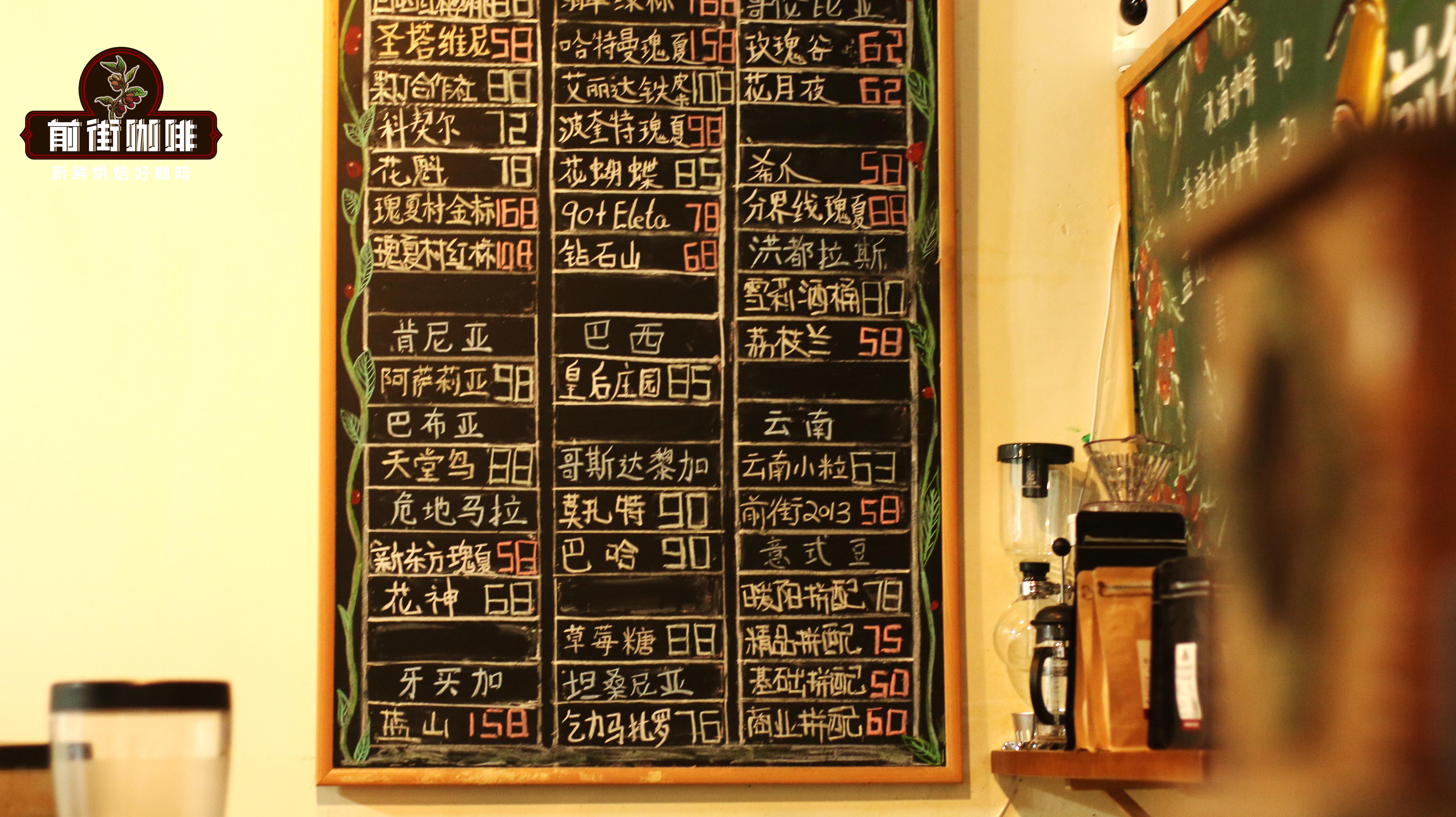
Asian coffee occupies a unique position in the global coffee landscape. Its flavors are generally known for being rich and steady, with a strong, rounded sweetness, while its aroma and brightness are relatively restrained. From Indonesia's Mandheling to China's Yunnan Arabica, and on to Papua New Guinea's specialty beans, Asia's various producing regions have cultivated distinctly styled coffees thanks to their unique climates, soils, and processing methods. This article systematically reviews the varieties, processing methods, flavor characteristics, and representative products of Asia's major coffee origins, with a focus on Front Street Coffee's recommended Indonesian Mandheling series, Yunnan Baoshan Catimor, and Papua New Guinea Paradise Bird Estate, among other beans, to help coffee lovers gain a comprehensive understanding of the diverse charm of Asian coffee. [more…]
An Overview of Asian Coffee-Producing Regions: A Analysis of Renowned Beans Such as Indonesia's Full-Bodied Mandheling and Yunnan's Small-Bean Coffee
Asian coffee occupies a unique position in the specialty coffee world with its rich, steady character. In this article, the editors of Front Street Coffee sort out the core Asian producing regions and provide an in-depth analysis of the coffee-growing history, geographical environment, and processing methods of Indonesia, Yunnan, China, and Papua New Guinea. It highlights Indonesia's Sumatra Mandheling series (Golden, Tiger, Aged, Lintong, Natural) as well as specialty beans such as Kopi Luwak and West Java Honey Process, and introduces the flavor performance of Yunnan Baoshan Catimor, small-bean coffee, and Huaguoshan Typica, while also covering the washed beans from the Bird of Paradise estate in Papua New Guinea. Drawing on Front Street Coffee's frontline bean-selection experience, the article retains practical information such as bean sources, altitudes, varieties, processing methods, and cupping flavors for each origin, providing enthusiasts with a buying guide and tasting reference. [more…]

Origin Beans for Cold Brew: Fruity African and Full-Bodied Asian Cold Brew Performance
When it comes to choosing beans for cold brew, the bean selection is often more important than the brewing parameters. Slow extraction at low temperature changes the way a bean's flavors present themselves—beans from some regions are stunning when cold brewed, while others fall flat. Approaching it from the perspective of region is a very practical way to choose cold brew beans. Beans from African regions are the fruit-forward stars of cold brew. Ethiopian [more…]